
WEAVING IN SILENCE
Pablo Armesto
Silence, a fleeting instant in which the sonic voracity of existence is suspended; a word that, as an auditory metaphor, leads us to the most intimate moments of contemplation, reflection, and introspection. Silence, the mysterious sensation that time and space are held in suspension, allowing a metaphysical, spiritual, poetic, even erotic dimension to emerge; the anguished peace in which the ancient goddesses, seated, unravel the threads of life and weave the fabric of time and existence. Silence, the dark word not yet spoken but latent, waiting to be uttered; the strings of a harp that await being plucked to trace through time vibrating lines, dissonant and consonant sounds that will give shape to musical poetry. Silence, the penumbra of space where rays of light reveal before our eyes the weave of forms, colors, and textures of a world that continues to seem profoundly unknown. Creation, the silent moment in which the artist glimpses forms that do not yet exist in space, draws lines in the void, intones chants from within, and finally murmurs words that emanate from the heart and the mind.
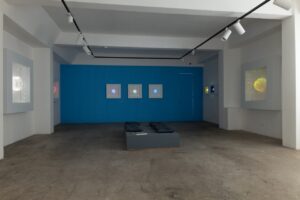
As in ancient poetry, where knowledge was knotted into the warp of art, Pablo Armesto weaves in his works the forms of an intermediate world between intimate fantasy and manifest reality. Pieces that, in sculptural fashion, invade space; yet they are heirs to painting that sought to emancipate itself from two-dimensional supports and defiantly claimed volume. In each frame a threshold opens, where interwoven filaments burst forth, resembling an ordered chaos. Whether through intentionally guided light, the dance-like movement of the threads, the layering of woven strata, or the complementary nuances of shadows, at the intersection of warp and weft forms emerge that, silent, had been waiting in the potential of the void to be discovered by creative imagination. Each work is an invitation to suspend time and contemplate carefully, within space, the crossing of planes, waves, and energy. Only in the darkness of silence, the white light as great matron, and colors, her children, become energy transformed into artistic matter to embroider intangible yet existing silhouettes.
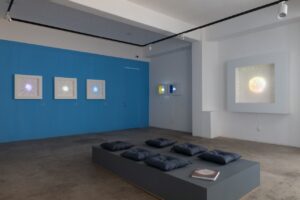
Metals, plastics, glass, electrical energy… Industrial materials of our present are the resources with which Armesto reveals invisible yet possible realities, thanks to sensitivity, intuition, and imagination. His works are a fold where the opposing and complementary verbs of being and existing coexist: to reveal and to conceal, to appear and to disappear, to live and to die, constant becoming in time. Each piece is a threshold through which we peer into possible universes, bridges that bind dimensions of sensation, perception, and representation. What was not, now is and manifests itself, appearing lyrically as luminous verses inscribed, embroidered into vacuity, into silence, into darkness: there where there is no word, where nothing had been uttered, where nothing had been seen.
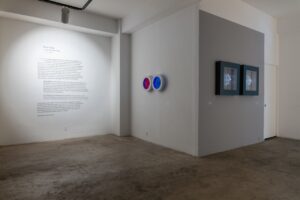
In sonic exploration, the power of silence had already been explored. Four minutes and thirty-three seconds of a violin without uttering a single word. Murmurs, accidents, a concert hall filled with held breaths and anticipation for whatever might occur. Listening to the fleeting nature of existence, of the here and now. Armesto questions the planes and spheres we inhabit, those we believe in and those we see. Optical illusions that reveal a plane traversing the present and that which we call “reality.” Energy is perhaps that which truly exists and is most mutable; it has awakened the most unsuspected theories of juxtaposed cultural worlds. As light and as color, Armesto transformed it into the finest way of inhabiting space, of seeing the invisible, and of remembering that where we see white, it is polychrome; and that where nothing is heard, there is a polyphonic concert of possibilities vibrating to be born. Art gives life to that which was not yet, and now is—taking form and continuing in constant transformation. Woven silence.
Abraham Villavicencio